
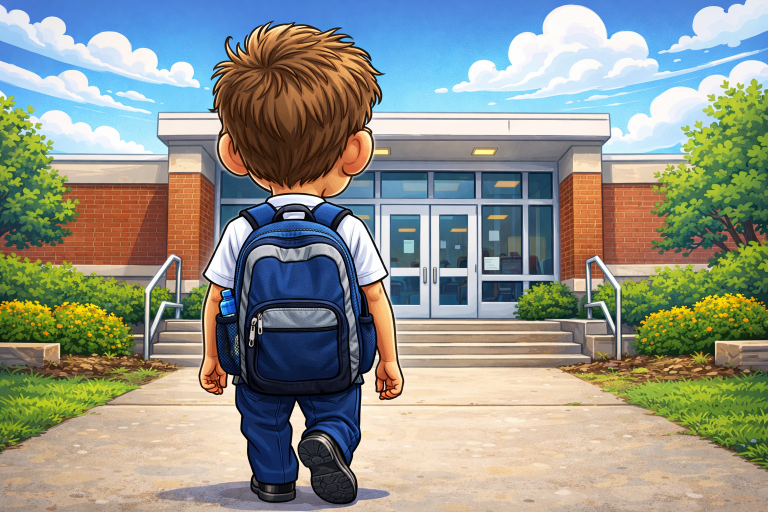
The move to secondary school is often described as an exciting milestone. New opportunities, new subjects and greater independence await.
Yet for some children, the challenge isn’t academic work. In fact, many are more than capable of keeping up in the classroom. The challenges are often less about the school itself and more about how a child experiences the changes that come with it. What feels exciting to one child may feel confusing, overwhelming or uncertain to another.
Some children begin thinking about secondary school months before September arrives.
They may worry about:
These children often spend a lot of time imagining what could go wrong. While they may appear prepared on the outside, they can be carrying a great deal of uncertainty inside.
Some children thrive academically but find social situations confusing.
They may wonder:
Secondary school introduces many unwritten rules. While some children pick these up naturally, others need help making sense of them.
Many children want friendships but are unsure how to take the first step.
They may stand on the edge of a group, wanting to join in but not knowing how. They might worry about saying the wrong thing or being rejected.
For these children, understanding how friendships develop can be just as important as learning conversation skills.
Secondary school requires children to manage timetables, equipment, homework, deadlines and changing classrooms.
Some children seem completely confident about the move, yet find organisation and planning difficult.
The challenge isn’t confidence. It’s managing the increased responsibility that comes with greater independence.
Some children place enormous pressure on themselves.
They want to follow the rules, meet expectations and avoid mistakes. When they are unsure what is expected, they can become overwhelmed.
Secondary school often requires children to cope with uncertainty, adapt to different situations and accept that mistakes are part of learning.
When parents think about secondary school transition, it can be tempting to focus on practical preparations such as uniforms, timetables and equipment.
These things matter, but understanding how your child experiences the transition matters too.
A child who worries needs different support from a child who struggles with friendships. A child who finds organisation difficult needs different support from a child who finds social situations confusing.
The move to secondary school is not one challenge. There are many different challenges experienced by many different children.
By understanding the hidden challenges behind the transition, we can better support children as they take this important step into the next stage of their education.