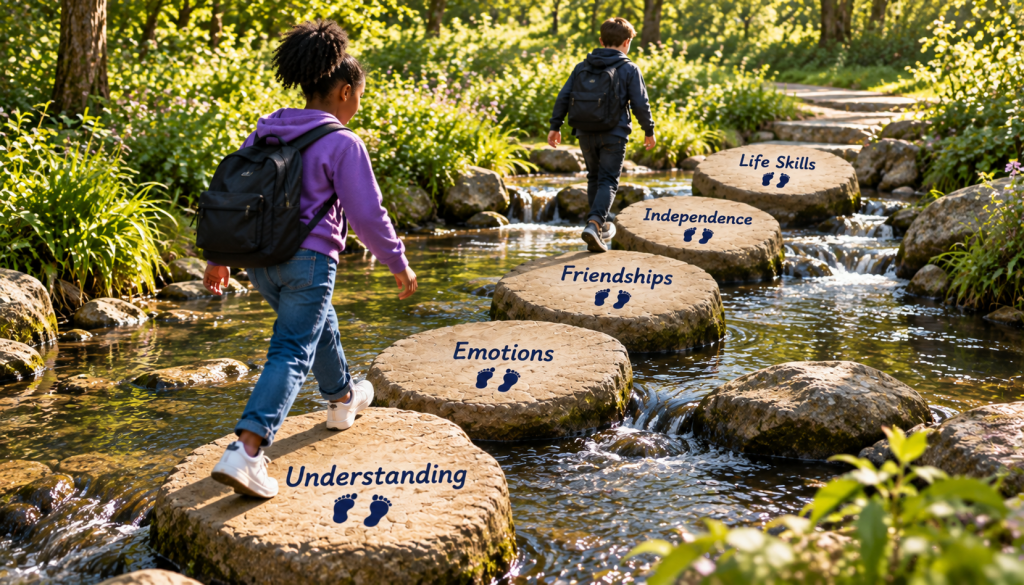
At Learn 2 Be Social, we recognise that each stage of growing up brings different social experiences, expectations and challenges, from early friendships and understanding emotions to navigating more complex relationships, communication and independence.
We support children and young people who may find it difficult to make friends, join conversations, understand social cues, recognise different perspectives, manage emotions or know how to respond in social situations. We also help them develop confidence, flexible thinking and a better understanding of everyday social expectations.
We first help learners understand how social situations work, what to notice and how to think about them. We then mentor them as they develop the confidence to apply that understanding in everyday life.
All social mentors working directly with children hold enhanced DBS checks and safeguarding training.
Our group sessions are designed for different ages and stages of social development. Please see each programme page for current availability and age guidance.
Can’t see a programme suitable for your child or young person’s age?
1:1 social learning support is available for ages 9–18.
Learn 2 Be Social uses a Practical, Understanding-Led Approach to Social Learning. Rather than teaching social skills in isolation, learning moves through three connected stages.
INPUT — Data Collection
Children are supported to notice and gather information about what is happening. What can they see, hear and observe? What are the facts of the situation?
PROCESSING — Thinking Space
Children are given time and support to make sense of the information. What might the situation mean? How might people be thinking or feeling? What are the expectations? What choices are available and what could happen next?
EXECUTION — Social Skills in Action
Children have opportunities to practise and apply social skills and strategies. The focus is on using what they have understood to consider what they could say, do or try in everyday situations.
Through real-life scenarios, guided discussion, reflection, problem-solving and opportunities to practise, children and young people are supported to build social understanding they can apply more independently in everyday life.
(Educational, not therapeutic)
Questions are welcome.